
Medical Transcription vs AI Transcription: Which Is Best for You?
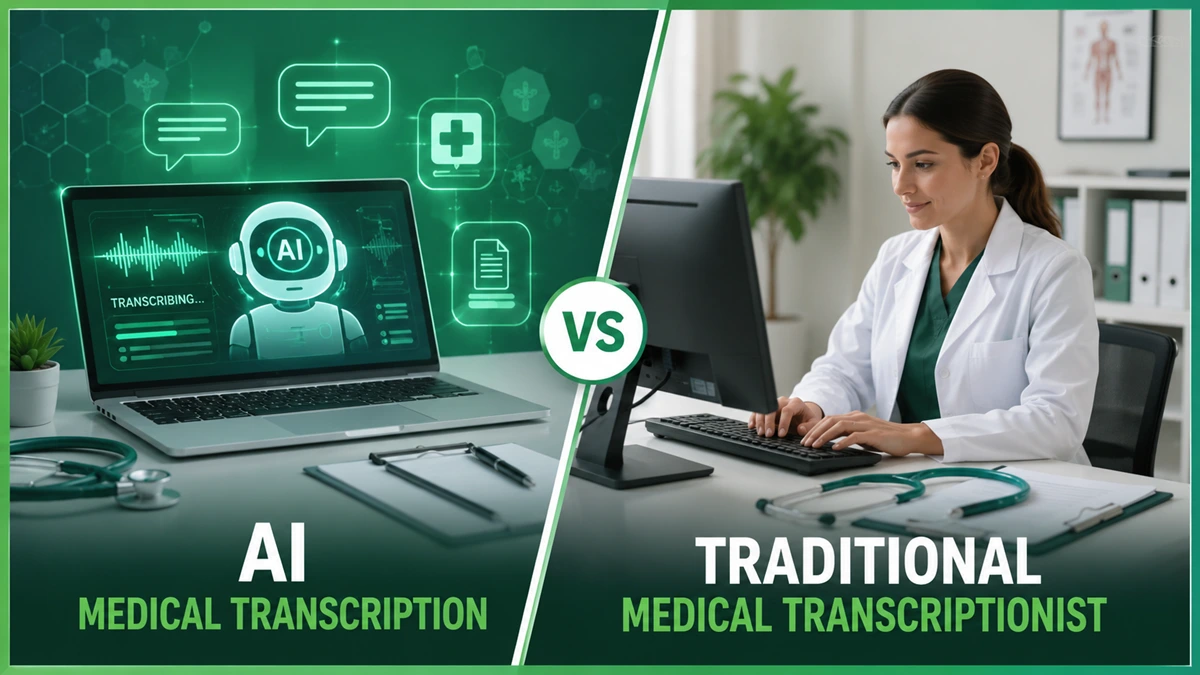
Healthcare providers generate large volumes of patient documentation every day. Accurate records are essential for quality patient care, regulatory compliance, and efficient billing. As technology advances, many organizations are comparing traditional Medical Transcription with AI-powered transcription solutions to determine which option delivers the best results.
While artificial intelligence offers speed and automation, human transcription continues to provide superior accuracy, reliability, and clinical understanding. Before making a decision, it is important to compare both options across key factors such as cost, accuracy, speed, ongoing effort, and integration.
Why the Comparison Matters
Patient records are more than simple text documents. They contain critical medical information that directly impacts treatment decisions, insurance claims, and legal compliance. Even small transcription errors can create significant problems for healthcare providers and patients.
According to research published by the National Library of Medicine, speech recognition systems can produce clinically significant errors that may affect patient care if not properly reviewed and corrected.
| Factor | Traditional Medical Transcription | AI Transcription |
|---|---|---|
| Accuracy | 98% to 99%+ with expert review | Typically 85% to 95% depending on audio quality |
| Understanding Medical Context | Excellent understanding of clinical terminology and context | Limited contextual understanding |
| Medical Terminology Recognition | Highly reliable | Can misinterpret complex medical terms |
| Speed | Fast turnaround with quality assurance | Near instant transcription output |
| Editing Required | Minimal editing required | Often requires significant corrections |
| Cost | Higher initial cost but fewer correction expenses | Lower upfront cost but hidden editing and management costs |
| Compliance Support | Strong human oversight and quality control | Depends on software configuration and review process |
| Ongoing Effort | Low maintenance for healthcare providers | Requires monitoring, training, and error reviews |
| Integration | Custom integration support available | Often integrates directly with digital platforms |
| Best For | Hospitals, clinics, specialists, and healthcare providers needing maximum accuracy | Basic documentation and preliminary drafts |
Accuracy: The Most Important Difference
Accuracy remains the biggest factor when evaluating transcription solutions.
Experienced transcriptionists understand medical terminology, specialty specific language, physician dictation styles, and clinical context. This expertise allows them to identify unclear speech, correct grammar, and ensure records accurately reflect the provider’s intent.
AI systems rely on speech recognition algorithms that convert spoken words into text. While these systems have improved significantly, they can still struggle with:
- Similar sounding medical terms
- Accents and dialects
- Background noise
- Multiple speakers
- Complex clinical discussions
A study from the University of Michigan found that AI generated medical transcripts can contain meaningful errors that require human review before being added to patient records.
In healthcare, even a single mistake involving a medication name or diagnosis can have serious consequences.
Cost Comparison
Many organizations assume AI is always less expensive. However, the true picture is more complex.
AI solutions typically involve:
- Subscription fees
- Software implementation costs
- Staff training
- Quality assurance reviews
- Ongoing corrections and edits
Traditional transcription services may have a higher upfront cost, but they often reduce hidden expenses associated with fixing documentation errors.
When evaluating Medical Transcription Cost, healthcare providers should consider the total cost of ownership rather than focusing solely on software pricing.
Fewer corrections and higher accuracy can generate substantial long term savings.
Speed: Is Faster Always Better?
AI transcription can generate text within seconds, making it appealing for busy healthcare environments.
However, speed does not always equal efficiency.
Many AI generated documents require:
- Proofreading
- Error correction
- Formatting adjustments
- Clinical validation
Traditional transcription may take slightly longer initially, but the final document is typically ready for immediate use with minimal revisions.
As a result, healthcare providers often spend less time reviewing completed records.
Ongoing Effort and Maintenance
One factor frequently overlooked is the amount of ongoing effort required.
AI transcription systems require regular oversight to maintain quality. Organizations may need to:
- Monitor performance
- Review error rates
- Train staff
- Update software
- Resolve integration issues
Human transcription services reduce this burden significantly. Providers can focus on patient care while trained professionals manage the documentation process.
This creates a smoother workflow and reduces administrative stress.
Integration With Existing Systems
Most modern AI platforms offer integration with electronic health record systems. However, implementation can sometimes create workflow disruptions.
A professional Medical Transcription Service often provides customized integration support that aligns with existing healthcare processes.
This personalized approach helps ensure:
- Smooth document delivery
- Consistent formatting
- Faster adoption
- Improved workflow efficiency
For many healthcare organizations, this level of support delivers greater long term value.
Key Facts Healthcare Providers Should Know
Several industry findings reinforce the importance of human oversight in medical documentation:
Human transcriptionists commonly achieve accuracy rates above 98%.
Speech recognition accuracy can vary significantly depending on speaker clarity and audio quality.
Medical documentation errors can affect patient safety, reimbursement, and compliance.
Studies published by the National Library of Medicine continue to highlight the risks associated with unreviewed automated transcripts.
These facts demonstrate why many hospitals, clinics, and healthcare organizations continue to rely on human expertise.
Which Option Is Best?
AI transcription offers convenience and rapid document creation. It can be useful for generating preliminary drafts and handling simple documentation tasks.
However, healthcare requires more than speed alone.
Traditional transcription provides:
- Greater accuracy
- Better clinical understanding
- Stronger quality assurance
- Reduced risk of documentation errors
- Less administrative effort
For organizations where patient safety and record accuracy are top priorities, human transcription remains the more dependable solution.
Conclusion
Artificial intelligence continues to transform healthcare documentation, but it has not replaced the value of human expertise. While AI can produce transcripts quickly, it often lacks the contextual understanding required for accurate medical records.
Traditional transcription continues to outperform automated solutions in accuracy, quality control, and clinical reliability. Healthcare providers who prioritize patient safety, compliance, and documentation quality will often find that human transcription delivers the best overall value.
FAQs
Is AI transcription accurate enough for healthcare documentation?
AI transcription can be useful for drafting records, but it may still produce errors involving medical terminology, medications, and clinical context. Human review is typically recommended.
Why is traditional transcription more accurate?
Professional transcriptionists understand medical language, physician dictation patterns, and healthcare documentation standards, allowing them to identify and correct errors effectively.
Does AI transcription reduce costs?
It may lower initial expenses, but additional costs related to editing, quality assurance, training, and corrections can reduce overall savings.
Which option is better for patient safety?
Traditional transcription generally offers greater accuracy and lower documentation risk, making it the preferred choice for patient records.
How do healthcare providers choose the right solution?
Organizations should evaluate accuracy, compliance, workflow requirements, integration capabilities, and long term value before making a decision.