
How Medical Transcription Integrates with EMR/EHR Systems to Improve Clinical Documentation
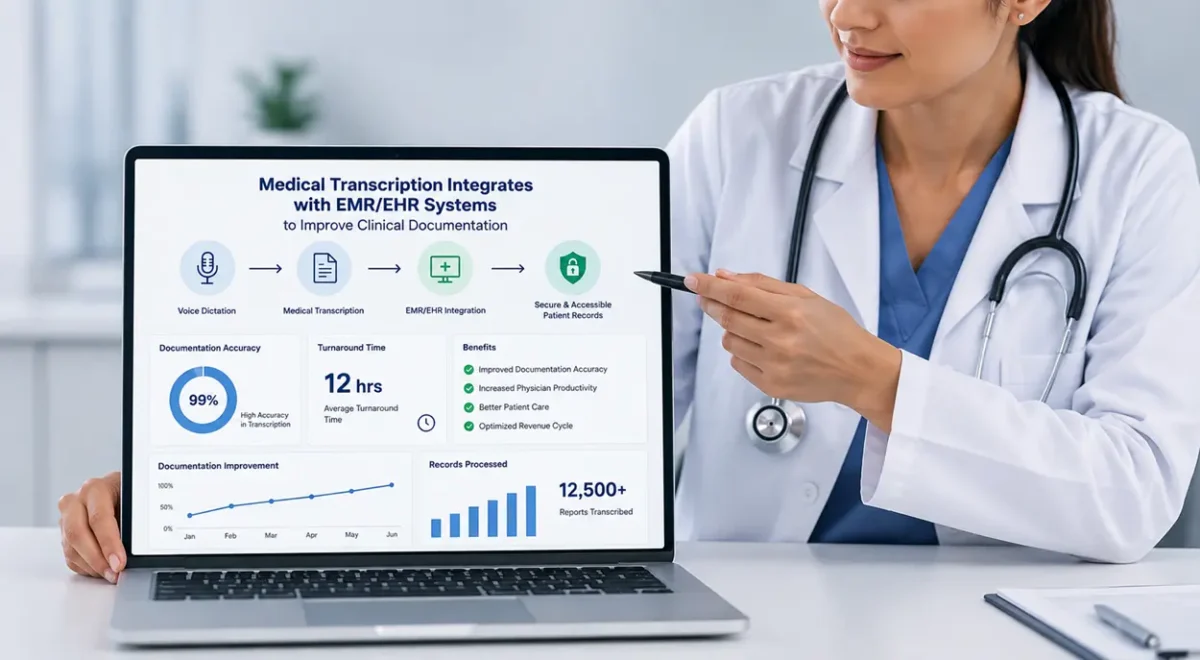
Healthcare organizations across the United States are rapidly embracing digital documentation to improve patient care and operational efficiency. EMR Transcription Services help bridge the gap between physician dictation and electronic health records by converting spoken notes into accurate, structured, and searchable clinical documents. This seamless integration supports healthcare providers with complete patient records, faster documentation, and better clinical decision making while allowing physicians to spend more time with patients instead of paperwork.
According to the Office of the National Coordinator for Health Information Technology, nearly all non-federal acute care hospitals in the United States have adopted certified electronic health record technology. As digital healthcare continues to evolve, accurate medical transcription remains a valuable part of maintaining reliable patient documentation.
The Connection Between Medical Transcription and EMR/EHR Systems
Electronic Medical Records and Electronic Health Records are designed to store patient information securely and make it available whenever authorized healthcare professionals need it. However, these systems are only as effective as the quality of the information entered into them.
Medical transcription converts physician dictations into organized clinical reports that are reviewed for accuracy before being integrated into electronic records. This process ensures patient information is complete, easy to understand, and readily available for future treatment.
Why Accurate Clinical Documentation Matters
Clinical documentation is more than a record of patient visits. It supports diagnosis, treatment planning, communication among healthcare teams, insurance claims, and legal compliance.
Incomplete or inaccurate documentation can result in delayed treatments, billing errors, and poor patient outcomes. High quality transcription helps eliminate these risks by delivering precise documentation that reflects the physician’s intent.
How Medical Transcription Integrates with EMR and EHR Platforms
Modern transcription workflows are designed to work alongside leading electronic record systems, making documentation faster and more efficient.
Converts Dictation into Structured Records
Healthcare providers dictate patient encounters using secure recording methods. Professional transcriptionists transform these recordings into well formatted reports that fit seamlessly into electronic documentation systems.
Supports Faster Record Availability
Quick turnaround times allow physicians to review, approve, and access patient records sooner. Faster documentation improves continuity of care and helps clinicians make informed decisions without unnecessary delays.
Improves Data Accuracy
Medical transcription professionals are trained to understand medical terminology, abbreviations, medications, and specialty specific language. Their expertise helps reduce spelling mistakes, formatting errors, and incomplete documentation.
Creates Consistent Documentation
Standardized reports improve readability and ensure every patient record follows a consistent structure. This makes it easier for physicians, specialists, nurses, and administrative teams to locate important information.
Key Benefits for Healthcare Organizations
Integrating transcription with electronic health record systems provides measurable advantages for healthcare providers.
Better Patient Care
Accurate documentation gives clinicians a complete view of the patient’s medical history, helping them make informed treatment decisions.
Increased Physician Productivity
Instead of spending hours typing notes, physicians can focus on patient care while transcription professionals handle documentation efficiently.
Improved Revenue Cycle
Detailed clinical records support accurate coding and billing, reducing claim denials and reimbursement delays.
Enhanced HIPAA Compliance
Professional transcription providers use secure workflows, encrypted file transfers, controlled access, and confidentiality protocols to protect sensitive patient information.
Reduced Administrative Burden
Automated document delivery into electronic record systems minimizes manual data entry and allows healthcare staff to work more efficiently.
Best Practices for Successful Integration
Healthcare organizations can maximize the value of transcription and electronic documentation by following these proven practices.
- Select a transcription provider with healthcare expertise.
- Ensure compatibility with your existing EMR or EHR platform.
- Use secure and HIPAA compliant workflows.
- Standardize documentation templates across departments.
- Monitor transcription quality through regular audits.
- Provide staff training on documentation standards.
- Measure turnaround time and accuracy regularly.
Human Expertise Still Makes a Difference
Speech recognition technology has improved documentation speed, but it cannot always understand complex medical terminology, different accents, background noise, or specialty specific language. Human transcriptionists review every report carefully, correct recognition errors, and ensure medical accuracy before records become part of the patient’s permanent file.
This combination of technology and human expertise delivers documentation that healthcare providers can trust.
Looking Ahead
As healthcare organizations continue investing in interoperability and digital transformation, medical transcription will remain an essential part of efficient clinical documentation. Future improvements in artificial intelligence and voice recognition will assist documentation workflows, but experienced transcription professionals will continue to play an important role in maintaining accuracy, compliance, and patient safety.
Organizations that integrate reliable transcription services with their electronic record systems are better positioned to improve workflow efficiency, reduce documentation errors, and enhance the overall patient experience.
Conclusion
Accurate clinical documentation is essential for delivering quality healthcare. Integrating medical transcription with EMR and EHR systems creates a streamlined documentation process that benefits physicians, healthcare staff, and patients alike. From improving documentation accuracy and physician productivity to supporting HIPAA compliance and better patient outcomes, EMR Transcription Services continue to provide significant value in today’s digital healthcare environment. By combining advanced technology with skilled transcription professionals, healthcare organizations can maintain complete, accurate, and reliable electronic patient records.
Frequently Asked Questions
What are EMR transcription services?
EMR transcription services convert physician dictations into accurate electronic medical records that can be securely integrated into an EMR system.
How does medical transcription improve clinical documentation?
Medical transcription produces complete, accurate, and well organized patient records that support diagnosis, treatment, billing, and communication among healthcare providers.
Is medical transcription compatible with different EMR and EHR systems?
Yes. Most professional transcription providers can integrate documentation with a wide range of electronic medical record and electronic health record platforms.
Does medical transcription support HIPAA compliance?
Yes. Reputable transcription companies use secure workflows, encryption, and strict confidentiality procedures to protect patient health information and comply with HIPAA requirements.
Why is human medical transcription still important?
Human transcriptionists understand medical terminology and clinical context, identify documentation errors, and ensure a higher level of accuracy than automated tools alone, especially for complex medical reports.