
Psychiatry Medical Transcription Services: A Complete Guide
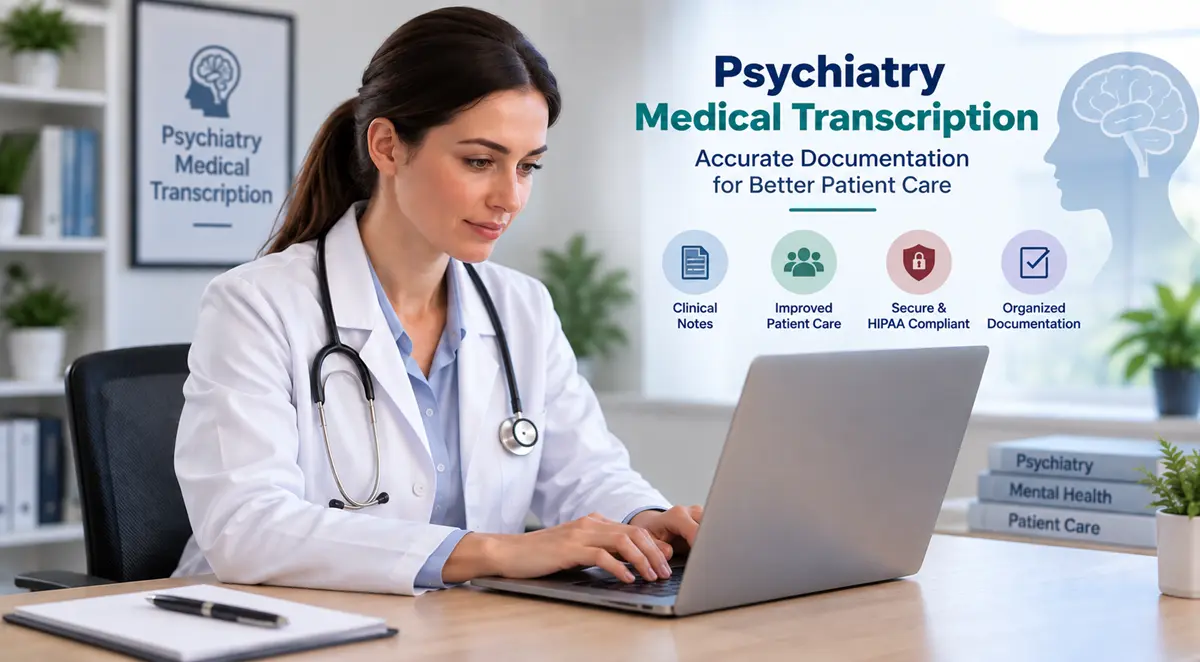
Psychiatric care involves detailed conversations, evaluations, treatment plans, and follow up notes. Accurate documentation helps healthcare providers maintain clear patient records and support ongoing care. Medical Transcription can help psychiatrists and behavioral health professionals turn dictated clinical information into organized documentation while reducing some of the administrative work involved in record keeping.
For psychiatry practices in the USA, the process also requires careful attention to privacy, accuracy, and appropriate handling of protected health information.
What Is Psychiatry Medical Transcription?
Psychiatry medical transcription is the process of converting a psychiatrist’s or other mental health professional’s recorded clinical notes into written documentation.
Depending on the practice, transcription may include:
- Psychiatric evaluations
- Patient history and assessment notes
- Progress notes
- Consultation reports
- Medication management notes
- Treatment plans
- Discharge summaries
- Follow up documentation
- Clinical case notes
The goal is to create clear and accurate records that can be reviewed and used as part of appropriate clinical workflows.
Why Accurate Documentation Matters in Psychiatry
Psychiatric appointments often involve detailed discussions about symptoms, medical history, medications, treatment response, and other factors relevant to patient care. Missing or incorrectly transcribing information can affect the clarity of a patient’s record.
The U.S. Department of Health and Human Services states that HIPAA protects individually identifiable health information related to a person’s physical or mental health, healthcare, or payment for healthcare.
Well maintained documentation can help providers:
- Maintain organized patient records
- Review previous clinical information
- Support continuity of care
- Document treatment decisions
- Reduce time spent preparing clinical notes
- Make relevant information easier to locate
- How Psychiatry Transcription Services Work
he transcription process generally follows a straightforward workflow.
1. Recording the Clinical Encounter
The psychiatrist records relevant information using an approved dictation method. Depending on the practice, this may involve a digital recorder, phone system, computer, or integrated clinical platform.
2. Transcription and Review
The recording is converted into written text. A professional transcription workflow should include careful review of terminology, names, medications, dosages, and other important clinical details.
3. Quality Check
The completed document is reviewed for accuracy, formatting, spelling, and consistency. Any unclear portion of a recording should be handled according to the provider’s established process rather than guessed.
4. Delivery and Record Integration
The completed document can then be delivered through the agreed workflow and, where supported, entered into the practice’s electronic medical record system.
HIPAA and Patient Privacy
Psychiatric documentation contains sensitive health information, making privacy and security especially important.
The HIPAA Privacy Rule establishes national standards for protecting medical records and other individually identifiable health information. It also requires covered entities to use appropriate safeguards to protect this information.
When selecting a transcription provider, healthcare organizations should consider:
- Secure methods for transferring recordings and documents
- Appropriate access controls
- Workforce privacy and security practices
- Confidential handling of patient information
- Business associate requirements where applicable
- Secure storage and disposal procedures
HHS also explains that covered entities generally need to take reasonable steps to limit the use or disclosure of protected health information to the minimum necessary for the intended purpose.
Benefits for Psychiatry Practices
Using an organized transcription workflow can provide several practical benefits.
Less administrative work: Providers can spend less time manually preparing certain types of clinical documentation.
Consistent documentation: A defined transcription process can help practices maintain a consistent structure across records.
Better accessibility: Clearly written notes can make relevant clinical information easier for authorized members of a care team to review.
Support for busy practices: Reducing documentation tasks can be useful in practices managing a large number of patient encounters.
Administrative burden is an important issue across healthcare. The American Medical Association reported that 43.2% of physicians experienced at least one symptom of burnout in 2024 and identified administrative burdens and documentation time among factors associated with physician burnout.
Human Transcription and AI: What Should Providers Consider?
AI based speech recognition and automated transcription tools are increasingly used in healthcare. However, psychiatry documentation can contain specialized terminology, context, medication information, and sensitive discussions that require careful review.
Providers should consider:
- Accuracy of clinical terminology
- Privacy and security controls
- Human quality review
- Integration with existing systems
- Turnaround time
- Correction procedures
- Overall documentation workflow
The right approach depends on the practice’s needs, technology, compliance requirements, and internal review process.
How to Choose a Psychiatry Transcription Provider
Before selecting a service, psychiatry practices should evaluate several factors:
- Healthcare experience: Look for experience with psychiatric and behavioral health terminology.
- Accuracy: Ask about quality assurance and review procedures.
- Security: Understand how patient information is transferred, stored, and accessed.
- Turnaround time: Choose a workflow that fits the practice’s documentation requirements.
- EHR or EMR compatibility: Check whether the service can fit into the existing documentation process.
- Scalability: The service should be able to support changing documentation volumes.
- Clear communication: There should be a defined process for handling unclear audio or corrections.Final Thoughts
Accurate psychiatric documentation supports organized clinical records and continuity of care. A well designed transcription process can help psychiatry practices manage documentation while allowing healthcare professionals to focus more of their time on patient care.
When evaluating Psychiatry Medical Transcription Services, practices should look beyond speed and cost. Accuracy, privacy, security, workflow compatibility, and quality control are equally important.
Frequently Asked Questions
What is psychiatry medical transcription?
It is the process of converting recorded psychiatric clinical information into written documentation for use within appropriate healthcare record workflows.
What documents can be transcribed for psychiatrists?
Common documents include psychiatric evaluations, progress notes, consultation reports, medication management notes, treatment plans, and discharge summaries.
Is psychiatry transcription required to be HIPAA compliant?
Organizations subject to HIPAA must follow applicable privacy and security requirements when handling protected health information. HHS provides specific guidance on HIPAA obligations and safeguards.
Can transcription services integrate with EHR systems?
Some providers offer workflows designed to support EHR or EMR systems. Practices should confirm compatibility with their specific platform before selecting a service.
Are psychotherapy notes the same as psychiatric clinical notes?
No. HHS distinguishes psychotherapy notes from other medical records. Psychotherapy notes are kept separately and receive special protections under HIPAA.
What should psychiatry practices look for in a transcription service?
Important considerations include accuracy, healthcare experience, privacy safeguards, turnaround time, quality review, secure data handling, and compatibility with the practice’s existing workflow.